
Capitol View | November 5, 2026
11/4/2026 | 26m 46sVideo has Closed Captions
Brian Sapp hosts this week’s top stories with analysis from Dan Petrella and Jason Piscia
Brian Sapp hosts this week’s top stories with analysis from Dan Petrella from Chicago Tribune and Jason Piscia from University of Illinois, Springfield
Problems playing video? | Closed Captioning Feedback
Problems playing video? | Closed Captioning Feedback
CapitolView is a local public television program presented by WSIU
CapitolView is a production of WSIU Public Broadcasting.
Capitol View | November 5, 2026
11/4/2026 | 26m 46sVideo has Closed Captions
Brian Sapp hosts this week’s top stories with analysis from Dan Petrella from Chicago Tribune and Jason Piscia from University of Illinois, Springfield
Problems playing video? | Closed Captioning Feedback
Where to Watch CapitolView
CapitolView is available to stream on pbs.org and the PBS app.
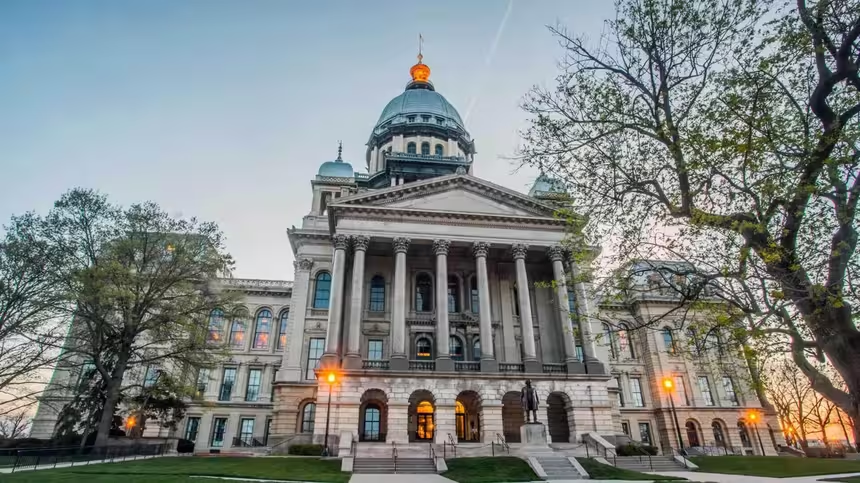
CapitolView
CapitolView is a weekly discussion of politics and government inside the Capitol, and around the state, with the Statehouse press corps. CapitolView is a production of WSIU Public Broadcasting.Providing Support for PBS.org
Learn Moreabout PBS online sponsorship[MUSIC] [MUSIC] >> Welcome to Capitol View on.
See you.
I'm Brian Sapp.
Illinois voters made their voices heard this week.
Many familiar faces are returning to their new offices.
Not a lot of surprises, but we do have some new faces in our elected government and the wave nationally, the blue wave that we've seen seem to have extended help.
Democrats extend their margins here in the General Assembly.
We'll look at Tuesday's results and talk about what it could mean for Illinois.
Joining us today to talk about these topics are Dan Petrella.
He's a reporter with the Chicago Tribune.
And Jason Piscia, he's the direc of public Affairs reporting program at the University of Illinois, Springfield.
Dan and Jason, welcome.
It's Wednesday morning.
I know I stayed up a little late.
Late?
You guys have your coffee this morning?
>> Yeah.
Just working on the first cup.
Still here this morning.
>> Um, as I said, there wasn't many surprises in the outcomes.
I think it was just by how much?
Um, we'll start with the governor's race.
It's Wednesday morning.
So some of these races we talk about, they're still figuring things out.
But governor's race that was settled called at seven a little bit after 7:00 last night.
I saw I didn't even have time to look at it and I saw it on my phone.
Um, Dan, let's start with you.
Can you just kind of walk us through these results with Governor Pritzker?
>> Yeah, I think my computer clock said it was still 7 p.m.
when the news came across the AP, uh, wire last night.
Um, a little bit faster even than they called it in 2022 when they called it, I think in less than ten minutes.
But, um, it was a decisive win.
Uh, there's still a vote to be tallied as of as we sit here on Wednesday morning.
Um, about 91% of the expected vote has been counted, according to the Associated Press.
And the governor's current margin of victory is about 23 percentage points, which is ten points better than he did in 2022.
Um, and about I'm going to try and do math.
I think he won by about 16 percentage points in 2018 when he was first elected.
So, um, you know, the idea that there is any sort of, um, Pritzker fatigue among the electorate, I think was put to rest or at least, um, you know, the Republicans didn't nominate the, the right candidate to capitalize that on that if that is out there.
Um, he was a very, very happy looking governor last night when he took the stage at Navy Pier at his, uh, his victory party.
Um, you know, it was a speech that was interesting because he really focused on Illinois.
Um, at the beginning, uh, he did mention Darren Bailey by name in his speech this time, which he did not do four years ago.
Um, and the first part of the speech was really focused on Illinois and all the things he loves about the state.
But then, uh, toward the end, uh, took a little turn where he said, uh, you know, he referred to one question I've gotten a lot over the last few months.
What's next?
Um, and then he talked about they climbed one mountain tonight, but we're at the base of another.
So, uh, you know, kind of maybe trying to have it both ways a little bit to tell people that he's focused on, on Illinois still at the beginning of the speech, but then also, um, you know, sort of pivoting to the speculation that he's going to enter the 2018 Democratic primary for president, not doing anything to dispel that today.
On Wednesday, his, uh, his, uh, on the government side is going to be doing a news conference later this morning where he's expected to lay out a, a day one plan for Democrats who have taken control of Congress.
Um, something he alluded to in an interview I did with him a couple weeks ago, where he was talking about many of the things that have been done here in Illinois, like raising the minimum wage and, and, uh, paid family leave, things of that nature.
Um, you know, very decisive win for the governor.
It was a good night for him all across the country and some of the congressional and, and US Senate races that his PAC ready for the fight had gotten involved in um, wins in, in lots of southern states where, uh, folks didn't necessarily think, um, you know, Democrats had a strong chance even given, uh, given the blue wave that we experienced.
Um, he supported the Democratic governor candidate in Georgia who won Keisha Lance bottoms, who is going to be the first black woman to be governor of a state.
Um, so a good night for, for J.B.
Pritzker, both here in Illinois and across the country.
Um, you know, one of the things that did strike me is one of the things he touched on in his speech that he wants to see addressed is campaign finance reform, which is, um, you know, an issue that they've had eight years to address here in Illinois.
And Illinois has some incredibly porous campaign finance laws.
And they really have done, um, you know, not very much to address that here.
So even to the extent where they passed a law saying that candidates can't raise money on days when the legislature is in session.
And during the course of this campaign, Darren Bailey's campaign admitted to holding a fundraiser on a day the legislature was in session.
But it turns out the law doesn't really make clear who is supposed to enforce that prohibition.
So clearly there's still work to do here in Illinois.
Um, but it's gonna be interesting to see sort of the detail that the governor lays out on these, these national plans and what his agenda is for, for the veto session that comes up in a couple of weeks.
And for the new term that starts in January.
>> Will be interesting to see how, you know, governor, sort of tiptoes on that line between, you know, being the governor of Illinois and possibly a candidate for president.
Uh, I think there's a lot to look at in how the, you know, the messaging and the timing works out, uh, you know, on on average, if you are a presidential candidate, you typically announce your candidacy the spring in the year before the election, like in February or March.
That's coming up in just a few months, 4 or 5 months here.
So, um, you know, and at the same time, the governor has his state of the state and budget address coming up, which is typically scheduled for mid-February.
Uh, will he announce presidential aspirations before then?
Will he use his budget speech to lay out an agenda that covers these nationally recognized issues like AI data center regulation and campaign finance reform and health care?
You know, things we're talking about in Washington, DC, and maybe not necessarily so loudly, uh, here in Springfield.
Um, you know, or will, you know, he'll, he'll set that agenda and then, you know, announce later, you know, how long do we, does he keep playing this game with us on will he won't, won't he before.
Uh, you know, he makes clear his intentions and we can move forward.
>> Yeah.
He doesn't have the fundraising needs necessarily, that some of the other potential contenders in the 2028 primaries do.
So perhaps he can wait until the the legislative session ends in in May or early June and announced then since, um, you know, he doesn't necessarily have to work quite as hard to, to raise money as some of these other candidates might have to.
>> Well, then we'll have to see if it's going to be.
I'm sure that's the question that he's going to be asked a lot.
And I know I get to talk with, uh, Lieutenant Governor elect Christian Mitchell later today for radio.
And, um, you know, the question I got to ask, and I'm sure they have their answers ready for that, but continuing on, uh, staying statewide.
We'll talk about Juliana Stratton, Senator Dick Durbin retiring.
Empty seat again, not a surprise.
Um, Lieutenant governor, Lieutenant Governor Stratton won pretty handily.
Um, again, let's Dan, let's start with you.
Can.
It's not a surprise, but what does her election show show us?
>> No.
Um, you know, it really doesn't.
I mean, one thing I think it shows is just the the real struggle that the Republican Party in Illinois is having with finding candidates who can appeal to voters who can be competitive in some of these races.
Um, roughly the same amount of the vote in um, she actually, it appears, uh, is maybe a couple points.
I'm not going to try and do the math while we're talking here, but a couple points, uh, wider margin than the governor had over Darren Bailey.
She has over Don Tracy, who's the former chairman of the Illinois Republican Party, um, who put a lot of his own money.
Um, his family owns dot foods, a large independent food distribution company.
Um, you know, it's, it's, um, you know, not like you said, not surprising.
It was called at the same time the governor's race was called, um, this was a very competitive Democratic primary, um, in which the governor spent, uh, you know, $10 million helping his two time running mate win win the party primary.
Um, you know, it's gonna be interesting to see.
She made it a campaign issue that she wouldn't vote for Chuck Schumer to be the the, um, now the Senate majority leader.
Um, so it'll be interesting to see if she stays true to that, uh, to that promise.
Um, and it'll be interesting to see how, uh, you know, she, she translates this job that she had in Springfield, which has sort of not really well defined responsibilities.
Um, and how she moves from that sort of executive role, but one that has very limited, you know, real power to, um, you know, a member of, of the Senate, it's going to be in a large majority, at least by science standards.
And, um, you know, she staked out some pretty progressive positions to be interesting to see.
Um, you know, if she's able to lead on an issue like, like the minimum wage, which she also made a big part of her campaign.
Um, yeah.
And I think, you know, for Republicans, up and down the ballot.
There's a lot of soul searching that needs to happen.
If they want to find a way to get back to being more competitive and more relevant, particularly in statewide politics, but also, um, you know, in the legislature as well, which I know we'll get to later on, but, um, yeah, decisive win for, for Stratton.
Um, and one of the things that notice I'll have to go back and double check, but listening to her speech last night, I didn't hear her mention or thank J.B.
Pritzker, which is a little bit, uh, eyebrow raising, but I know she's done a little bit to try to not distance herself from him, but but show a measure of, you know, being her own candidate and her own person and, um, you know, staking out a little independence there.
>> Uh, Jason, one of the things there's a couple historic here, uh, two women representing Illinois now in the Senate, the second black woman to, to be senator.
I got to hear, uh, former Senator Carol Moseley Braun was here just a year ago.
Um, Dan was talking about that jump.
How do you see Juliana being able to handle this transition onto more of a, you know, having a finger in national stage?
>> Yeah.
And not just two women.
It's two women of color, which is the first time any state has done that in the U.S.
Senate.
So, uh, you know, another historic element for, for Illinois to look at.
Um, yeah, it's going to, you know, uh, Juliana Stratton had a, you know, a very short career in the Illinois house before J.B.
Pritzker sort of plucked her out of the house and, you know, put her onto the the lieutenant governor ticket.
Um, so we're going to see, you know, her ability to lead and her ability to drive conversations.
You know, I think if we look at, you know, how outspoken she has been against the Trump administration, and there's been some, you know, very aggressive ads that she ran and the way she talks and she is, uh, you know, maybe even an antidote is maybe that's the right word for, you know, how Donald Trump, you know, his rhetoric and how he talks about opponents.
Uh, you know, Juliana Stratton can maybe keep up with him slightly, maybe to an a limited amount.
And Tammy Duckworth is no slouch with that either.
She's also very outspoken.
So, uh, we have two very, you know, anti-Trump, uh, outspoken, uh, people representing us in the Senate now.
Uh, and, you know, with the new, you know, majority up to, I think at 54, 55 seats that, uh, Democrats will have in the US Senate going into this, uh, this next version of it.
Um, you know, there's some real backing behind her to, to be able to do these things.
Mhm.
>> All right.
Well, let's move on.
Uh, statewide races, uh, those again, not many surprises.
So we'll all the Republicans ran, ran the, the slate there, the one I did want to talk about a little bit.
Um, and Dan, you noted this, um, Secretary of State Alexi Giannoulias won, I think the numbers.
He had the widest margin of all the statewide offices.
But he's also thrown his hat in the ring for the mayor of Chicago.
What did you notice yesterday with Mr.
Giannoulias?
>> Yeah, I think some folks up here were wondering whether he was focus was going to be on the results last night or I believe in ongoing, uh, challenge to his mayoral petition signatures, which, due to some craziness of our election calendar filing, happened right in the middle of like the last, you know, push of the general election here.
Um, he was making the rounds to lots of different campaign parties.
I know, I heard he was at, um, the party for, uh, Jessica Biggs, who's the winner of the first ever Chicago school board president election.
Um, the results of legislation passed in Springfield a few years ago.
Um, he popped up at, uh, the victory party of Patti Garcia, who was elected to represent Jesus, Chuy Garcia, or to succeed, excuse me, in the fourth Congressional District.
So he was making lots of appearances around last night.
Um, you know, one of the interesting parlor games I games.
I think that's going to be happening in Springfield now, is who's going to be angling to get the nomination to be Secretary of State for the rest of the term, if indeed Alexi is elected mayor in the spring here in Chicago.
Obviously, there's a long way to go before before that.
But, um, yeah, certainly decisive victories all around and just more evidence of, um, you know, the need for Republicans to really reset here in Illinois if they want to be competitive.
>> We have about ten minutes left.
And I wanted to spend, we have the legislature.
And then there's a couple tangential topics that are in there.
So let's go to that.
Um, Jason, I'll kind of kick it off with you.
Um, there's already a super majority.
Uh, we had the, the blue wave across the United States that seemed to have brought in the wave hit Illinois, um, increasing Democratic numbers here.
What are we seeing, you know, on Wednesday morning as we look at the new General Assembly.
>> Yeah, the blue wave actually hit Illinois.
Illinois was already a blue ocean and the Republicans are drowning in it.
Um, but, uh, you know, the blue wave hit and, you know, it looks like, uh, the Senate, the Democrats might pick up up to six new seats, giving them a 46 to 13 majority.
And in the House, they could pick up maybe as many as 6 or 7, giving them a majority of, uh, you know, 85 to 33.
If those numbers stick as we move forward and those would both be, you know, high water marks since, uh, you know, the legislature came to its current size back when the cutback amendment was approved in 1980.
Uh, so, you know, those are big numbers.
Um, obviously, uh, it, uh, um, you know, further erodes any, uh, influence that the Republicans have in Springfield, especially in the legislature, uh, the ability to, to get anything passed or listened to.
Uh, you know, becomes even less when there's just so few Republicans walking around the building.
Um, you know, I think one of the tangential issues we can talk about is, you know what, uh, you know, what the effect is when, when Republicans just keep getting, uh, sort of excluded and stamped out of the process.
You know, many of the viewers of this show are downstate Illinois residents.
And, you know, in many downstate counties, there's been an effort to put a referendum on the ballot to separate Cook County from the rest of the state and create a new Illinois, so to speak, that just consists of of not Cook County, Illinois.
Um, 30 some counties had previously approved this, and there was another 11 counties this week that had that on their ballot.
Uh, I didn't look at the final results, but I'm assuming most of the counties approved that.
Uh, again, just a, an advisory referendum.
And really, you know, it's, uh, a the concept is, is, you know, a fantasy.
Anyway, just with the process, if you want to do create a new state, you know, article four, section three of the US Constitution talks about if you want to make a new state, it has to be okayed by the state legislatures and Congress, which are, you know, in Illinois and DC now all run by Democrats, which are not going to, you know, give that give that a second to look at.
But I think it speaks more to just the emotional feeling that Republican downstate Republicans have, that they're not being represented, uh, that they don't have a voice in state government, uh, that the Democrats are just running roughshod over, uh, in Chicago especially is running roughshod over, over the rest of the state's priorities and the rest of the state's needs.
And people feel left out down here and, uh, you know, doing something to try to gain some attention to, to bring those feelings to light.
Again, I don't think it'll ever, it won't ever become a separate state.
But, uh, again, it just highlights the, the increasing amount of, you know, sadness and frustration that, uh, you know, every day Republican downstate residents have that, uh, they wish people would care about them.
>> Mhm.
Yeah.
We're here in Jackson County, where we are.
Carbondale is still it's a little bright spot of blue on the map of red.
And in plenty of the covers that I've done.
Just people talk about feeling like they don't have their voices heard.
And it was a question I had last night.
I talked with Senator Jacobs, who replaced Dale Fowler as a Republican, and he, uh, talked about how he's trying.
You know, I asked him, how does he bridge that gap?
And he just said that he tries to be collegial and try to work together.
And so we'll see how that goes.
Dan, what sort of impacts you already have a supermajority and even more supermajority.
What does that kind of lead us to think might happen in the spring?
>> Yeah.
I mean, I think one of the interesting things to watch is going to be the House in particular, where we have seen over the last several years where the the 78 members or I guess 77, 76 after they booted a couple members out of the caucus.
However, you want to count it up, just how unmanageable or difficult to maybe not unmanageable.
Maybe that's an overstatement, but how difficult to manage all those competing priorities can be at times.
You know, you have a wide range of of even among Democrats of, you know, where people fall on the political spectrum.
Um, you know, I have a feeling some of these candidates are going to be coming in, are going to be more progressive candidates in the suburbs.
So you might see more, um, you know, conflict among Democrats between progressives and moderates and how they manage that.
There's also the questions, um, you know, swirling around House Speaker Chris Welch and his handling of the sexual harassment, um, case involving former state Representative Harry Benton that came out over the summer.
Um, you know, there's they have to vote every two years to decide who is going to be the speaker.
So there's the open question of, um, you know, whether, uh, Welch maintains the gavel, whether there's a real movement to, um, you know, replace him with, with someone else.
He was very quick last night to, to take credit for the success of Democratic candidates had on the House side.
Um, you know, on the Senate side, I think it's a little more stable.
Um, I think Don Harmon has mentioned his leadership as Senate president pretty well.
And, you know, he's got his caucus pretty well.
Um, managed not to say that they agree on everything or there aren't folks who, who don't like decisions that are made by the caucus from time to time.
But, um, I think there's less question about him continuing to be to be Senate president.
Um, yeah.
And it's going to be interesting to see what the legislative agenda is.
Um, you know, how many bills new members that are coming in are going to be able to, to run and get passed.
You know, one of the really interesting things to me is as somebody who grew up in, in DuPage County, as how I haven't seen the final results, but many of the seats in DuPage that still or that touched into DuPage, that still had Republican legislators representing them have now flipped to, uh, to Democrats.
Um, Amy Grant, who was from Wheaton, for example, decided not to run.
And it looks like her seat is going to go to a Democrat.
So, um, yeah, it's a big question.
And I think one of the interesting things I saw a press release from the Illinois Freedom Caucus this morning, um, bemoaning the decline in numbers among their members over the last few presidential election cycles and, and midterm cycles.
And, um, you know, sort of asking Republican leadership, like, are we ready to do something different?
But that sort of strikes me as a misreading of the the results all across the country last night, which were really a repudiation of the Trump administration, what the direction the economy is going nationally.
And so, um, I feel like a little bit of a broken record here.
But I think it's, you know, the Republicans, if they want to be competitive, um, you know, they can blame the maps in some of these instances, but, um, you know, statewide election results are statewide election results.
And so if they want to be competitive, they have to figure out how to appeal to people in places like DuPage County, um, where they used to hold all the power.
And, and having Republicans in the more populous suburbs gives downstate Republicans a little more power as well, because, you know, their caucus is bigger and they, they can, um, you know, have more say in the process.
>> Um, Jason, sorry, I wanted to ask.
We've talked Dana shared a lot about the Republican from your point there in Springfield and just your coverage and a time with it.
It has the Republic.
I mean, has their time passed or are they able.
I mean, we're talking 60, 65% to 30%.
That's a pretty big chasm.
Is there do you think that there's a chance that they can come back, or is it just inroads?
Um, once this blue wave subsides, subsides?
>> Yeah.
I mean, it's the Democrats have been on quite a run here in Springfield.
Uh, you know, no Republican has won a statewide race since 2014.
Um, you know, Democrats have had the trifecta of control in the House, Senate and the governor's office for the past 23 years, with the exception of Bruce Rauner's four years as governor.
Um, but yeah, I think, uh, as Dan alluded to and he mentioned, uh, a lot of this sits on the shoulders of Donald Trump.
I think, you know, the country this week, uh, made it clear that, uh, you know, they're, they're not, they're tired of his policies.
They're tired of his behavior.
Uh, just tired of, of the effects of his decisions on, on their pocketbooks, uh, especially, um, and I think, you know, listening to the pundits talk last night on the national level, just that, you know, this is finally a wake up call to Republicans that, you know, maybe we should moderate out a little bit and try to appeal to a larger base and, um, realize that the Maga movement, uh, turns a lot of people off and Donald Trump turns a lot of people off.
And there's a lot of good, you know, reasonable Republicans out there and we need to hear from them more.
You know, we'll see who the Republicans put up for president, uh, in two years.
You know, JD Vance is, you know, a Maga disciple.
Um, you know, is it time to move on from someone like him and, and find someone more moderate to, to represent the interests of the party?
Um, so we'll see, you know, where that goes.
And if that happens on the national level, I could see, you know, the wave sort of subsiding here in Springfield as well.
Uh, just again, uh, Darren Bailey, you know, got trounced this week just because, you know, J.B.
Pritzker painted him as a disciple of of Donald Trump.
And that just doesn't play here in Illinois.
Uh, there are more moderate Republicans out there that could have some greater success on a statewide ballot here in Illinois.
Uh, they just don't win primaries.
Um, so the Republican Party can figure that out and realize that to the greater good, if we can, you know, find a more down the middle candidate, they'll have some success.
But, um, but so far they haven't proven that they wanted to do that.
So we'll see where it goes.
>> Okay.
Yeah.
I mean, the attempt.
Oh go ahead.
>> Go ahead.
No go ahead.
>> I was just gonna say the attempt that was made well funded attempt in the 2022 election with Richard Irvin, the former mayor of Aurora.
Um you know, didn't play well.
As Jason said in the Republican primary, they spent $50 million and he finished in third place.
So, um, maybe this is sort of the thing that that changes the tide and we'll just have to see.
You know, um, looking at the maps last night, there's a lot of blue spots where we didn't think we'd be seeing blue.
So who's to say, you know what could happen here in Illinois in the future.
>> Okay, well, we've got we've got elections behind us.
Hopefully our airways will get a bit of a cleanse from these election ads.
And we can we've got we didn't even touch on the veto session, but that'll be next week.
We can talk about that and see what we come up with.
That gentleman, it was good talking to you.
Thanks for joining us this week.
>> Thank you.
You as well.
>> That's it for this week's edition of Capitol View.
On behalf of Dan Petrella and Jason Piscia, I'm Brian Sapp.
Have a good day.
[MUSIC] [MUSIC]
 New Episode
- News and Public Affairs

Top journalists deliver compelling original analysis of the hour's headlines.

- News and Public Affairs

Today's top journalists discuss Washington's current political events and public affairs.




 New Episode


 New Episode




Support for PBS provided by:
CapitolView is a local public television program presented by WSIU
CapitolView is a production of WSIU Public Broadcasting.