
October 22, 2026 - PBS News Hour full episode
10/22/2026 | 57m 46sVideo has Closed Captions
October 22, 2026 - PBS News Hour full episode
October 22, 2026 - PBS News Hour full episode
Problems playing video? | Closed Captioning Feedback
Problems playing video? | Closed Captioning Feedback
Major corporate funding for the PBS News Hour is provided by BDO, BNSF, Consumer Cellular, American Cruise Lines, and Raymond James. Funding for the PBS NewsHour Weekend is provided by...
October 22, 2026 - PBS News Hour full episode
10/22/2026 | 57m 46sVideo has Closed Captions
October 22, 2026 - PBS News Hour full episode
Problems playing video? | Closed Captioning Feedback
Where to Watch PBS News Hour
PBS News Hour is available to stream on pbs.org and the PBS app.
Providing Support for PBS.org
Learn Moreabout PBS online sponsorshipGEOFF BENNETT: Good evening.
I'm Geoff Bennett.
Amna Nawaz is away.
On the "NewsHour" tonight: The Justice Department is notifying local election officials which counties it plans to monitor on Election Day.
Why what's been a longstanding practice is now raising concerns of potential election interference.
From Lockheed Martin's factories to the front lines in Ukraine, the effort to build more defensive missiles faster.
TIM CAHILL, Lockheed Martin Missiles and Fire Control: Warfare is changing, and the number of interceptors you might need for a prolonged conflict is becoming larger and larger.
GEOFF BENNETT: And federal education grants can now be used for short-term vocational training, but will those programs live up to their promise?
SARA STANDLEE, Ivy Tech Community College: A lot of my students, they'll get hired before they graduate.
That's how much of a need there is for medical assistants out there right now.
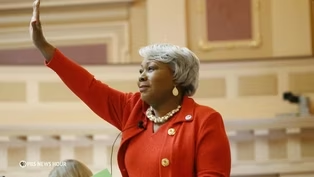
(BREAK) GEOFF BENNETT: In the day's other headlines: Federal authorities charged one of Virginia's most powerful state Senator Louise Lucas, with running a criminal marijuana enterprise today.
Attorney General Todd Blanche and FBI Director Kash Patel announced the charges this morning, which include drug trafficking and money laundering.
TODD BLANCHE, U.S.
Attorney General: The charges listed in the indictment reflect the alleged behavior of a public servant who put her own financial interests before the people she was elected to serve.
GEOFF BENNETT: The indictment against Lucas and six other defendants comes a month after the FBI searched her district office and a cannabis shop that she co-owns.
Lucas left a Norfolk courthouse this afternoon after surrendering herself earlier today.
She's been a vocal critic of the Trump administration and played a leading role in redrawing Virginia's congressional maps to favor Democrats.
That effort was later thrown out by the courts.
In a statement, Lucas said today: "I will not be intimidated, I will not be bullied, and I will not back down."
In Arizona, a tornado watch remained in effect today for a large part of that state, as a storm system brought more severe thunderstorms and heavy rain across the Southwest.
Powerful storms swept across Central Arizona starting yesterday, bringing golf ball-sized hail that damaged homes, shattered windows, and dented cars.
In the Phoenix metro area, strong winds uprooted trees.
And in Navajo County, a possible tornado left a trail of destruction, leaving residents there shaken as they surveyed the damage.
JACKIE PEARSALL, Heber-Overgaard, Arizona, Resident: The lights went out.
The power went out and it started hailing rolling bad.
And we heard this big boom.
GEOFF BENNETT: Local authorities reported no deaths or serious injuries.
Meantime, Subtropical Storm Josephine is strengthening off the East Coast.
While it's not a hurricane, it has some hurricane-like characteristics and could bring heavy rain, damaging winds, and rough seas to parts of the coastal Northeast through Saturday.
In Ukraine, officials say at least four people were killed in strikes that started just hours after Russian President Vladimir Putin agreed in principle to resume talks with the U.S.
and Ukraine.
Eyewitness video shows the attacks hitting the capital, Kiev, overnight.
Firefighters across 12 regions battled blazes after Russia hit residential buildings, energy facilities, a railway station and Kyiv's subway system.
Residents there say they don't see any signs that the war will end anytime soon.
ANNA, Ukraine Resident (through translator): I don't believe in anything.
A lot is damaged.
How can we even talk about humanism and peace after this?
It's simply impossible.
GEOFF BENNETT: Also, today, President Trump was asked about the limiting of Elon Musk's Starlink services to Ukraine, and, in particular, a report from The Wall Street Journal saying that the president called Musk to ask him to lift restrictions on the service.
DONALD TRUMP, President of the United States: Yes, I don't want to comment on it.
Whether I called or whether somebody else called doesn't make any difference.
I guess the bottom line, he put it back.
GEOFF BENNETT: Ukraine's forces use the military grade system of Starlink called Starshield in their fight against Russia.
Today, U.S.
and Ukrainian officials reportedly said it's now operating normally.
In France, thousands of protesters returned to the streets of Paris today despite bans on such demonstrations in several cities.
(SINGING) GEOFF BENNETT: Students sang and chanted in a peaceful demonstration after organizers said a Paris court had overturned a ban on gatherings.
French President Emmanuel Macron says additional restrictions are expected in the coming days.
Meantime, in Serbia, drums and whistles echoed through the streets of Belgrade as students there poured into Serbia's capital last night.
They're gathering for a massive rally ahead of Sunday's elections, challenging the rule of President Aleksandar Vucic, whom critics accuse of growing authoritarianism.
And in Southern Italy, truckers protesting high diesel prices have disrupted production of one of the region's signature products.
That's buffalo mozzarella.
The industry estimates losses of more than $3 million in a single day.
A federal judge in Florida has ordered President Trump to sit for a deposition in his $10 billion defamation lawsuit against the BBC by December 11.
If he fails to appear, the case could be dismissed.
Mr.
Trump sued the BBC last year over its editing of his speech to supporters on January 6, 2021.
He was scheduled to be deposed last week, but backed out, citing what his lawyers described as a matter of national importance.
The president was actually campaigning in Georgia that day.
The deadline for gathering evidence in the case is December 18.
In New York City, lawmakers have voted to ban horse-drawn carriage rides in Central Park months after a teenager died in a fall from one of the carriages in June.
The tourist tradition dates back more than 150 years, but today the city council approved a bill that would bring it to an end by 2028.
JULIE MENIN, New York City Council Speaker: Midtown Manhattan is not where horses belong.
GEOFF BENNETT: Animal rights advocates have long argued that the horses endure harsh working conditions and pose safety risks to pedestrians.
But carriage drivers insist the animals are well cared for and say the ban threatens their livelihoods.
ALEXUS LAWSON, Horse Carriage Driver: Some horses are OK with stopping work and going out to a pasture.
Some horses like this one would not be OK with that.
Like, I raised this horse.
We did everything together.
And I'm like, the fact that somebody wants to try and tear that from me because they don't like her job?
GEOFF BENNETT: The legislation requires Mayor Zohran Mamdani to develop a plan to help the more than 150 current drivers find other work.
The labor union representing the drivers has vowed to challenge the bill.
On Wall Street today, falling AI stocks weighed on the broader markets.
The Dow Jones industrial average managed a slight gain of about 11 points.
But the Nasdaq tumbled more than 2.5 percent.
The S&P 500 also ended sharply lower.
And actor Tom Skerritt has died.
TOM SKERRITT, Actor: Maverick, you will get you RIO when you get to the ship.
And if you don't, give me a call.
I'll fly with you.
GEOFF BENNETT: His career spanned more than six decades and included memorable roles such as Viper opposite Tom Cruise in the 1986 blockbuster "Top Gun" and the spaceship captain in the science fiction classic "Alien."
He also appeared in the film "MASH," "Steel Magnolias," and "A River Runs Through It."
On television, Skerritt won an Emmy for his portrayal of Sheriff Jimmy Brock in the CBS drama "Picket Fences."
His family says he died Wednesday of natural causes.
Tom Skerritt was 93 years old.
Still to come on the "News Hour," we report from Maine, where incumbent Susan Collins is in a dead heat with newcomer Troy Jackson for the U.S.
Senate seat; Christina Applegate reveals a multiple sclerosis misdiagnosis, highlighting the difficulty of assessing the disease; and an adaptation of the experimental novel "Lincoln in the Bardo" hits the stage at New York's Metropolitan Opera.
With a proper welcome to the "News Hour" now, we should say we had a technical issue at the start of tonight's broadcast.
So thank you for bearing with us.
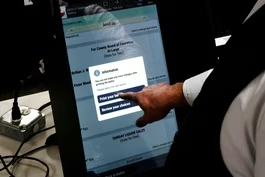
Now, with the midterm elections less than two weeks away, a new legal battle is raising questions about the federal government's role in policing who is eligible to vote.
A federal judge in California has blocked a Department of Homeland Security effort to identify noncitizens on voter rolls.
I spoke earlier about it with our White House correspondent, Liz Landers.
So, Liz, this federal judge issued this ruling with now less than two weeks before Election Day.
So there's some clear urgency here.
LIZ LANDERS: Yes, the Department of Homeland Security has been engaged in this operation since August, according to this lawsuit.
And this federal judge in California ruled yesterday that they must restrict their field operations to look for voter fraud and noncitizens on voter rolls.
DHS cannot do stops in field interviews unless they think someone is a noncitizen.
This applies to nine different states, California, Connecticut, Georgia, Missouri, Nevada, New York, Pennsylvania, Washington, and Wisconsin.
There are hundreds of DHS agents who are assigned across all states to look for voter fraud.
This has been dubbed the Unlawful Voter Initiative.
And the judge here is concerned that the lists created by DHS had errors and did have citizens' names on them.
It is already illegal to vote if you are a noncitizen and participate in a federal election here.
It's also extremely rare for this to happen.
The judge is allowing this to go into effect tomorrow, so that the government has time to appeal.
GEOFF BENNETT: And there's a separate lawsuit the DOJ has brought in California related to mail ballots?
Bring us up to speed.
LIZ LANDERS: Yes, the Department of Justice is suing the California secretary of state and also the top election official in Los Angeles County to halt them and prevent them from counting 20,000 mail ballots there.
DOJ has alleged that there are 20,000 noncitizens on the voter rolls there.
The L.A.
County registrar's office told me today that they have not stopped the ballot processing there.
This is still playing out in a court of law.
This is a hearing.
The next hearing on this is going to be next Tuesday.
And the attorney general, Todd Blanche, was asked about the department's intentions behind the lawsuit earlier today.
TODD BLANCHE, U.S.
Attorney General: We're not trying to create chaos.
It continues to baffle me why anybody, if presented with evidence that there are tens of thousands, 20,000 ineligible voters that are receiving ballots, that there isn't some motivation, anything to do something about that.
LIZ LANDERS: In response to these actions from the Trump administration and others, there's now been a group of Democratic organizations that have sued the Trump administration, alleging voter intimidation.
And this lawsuit says that there are -- that the Trump administration is using unfounded voter fraud claims to influence how the elections are conducted.
Geoff, I want to be clear here that there are very few, but there are examples of noncitizens voting in elections.
New Jersey uncovered a few months ago a software glitch -- this happened years ago -- that allowed noncitizens to register and vote in that state.
It was a mistake.
There were 6,600 people that registered to vote; 340 of those actually vote.
GEOFF BENNETT: When the DOJ alleges that some 20,000 noncitizens are on the voter rolls in California, where is that number coming from?
LIZ LANDERS: So the Department of Justice and the Department of Homeland Security are compiling lists based on state data that they're getting, but it's not complete data sets.
And that's why you are seeing states like California, like the secretary of state and the Los Angeles County registrar, saying, we don't know if this is an accurate list.
And, in fact, some of those lists that they have been giving back to states saying, hey, we think that all these people are noncitizens, as it turns out, especially in Nevada -- this was a recent example -- there were many people on that list, in fact, all of them in Nevada, who were U.S.
citizens.
GEOFF BENNETT: Now, beyond all this, you have also reported today that the Justice Department is preparing a large-scale election monitoring effort?
What did they announce?
LIZ LANDERS: Yes, a senior Department of Justice official briefed reporters on this and said that they're going to send more than 1,000 election monitors across all 50 states in the country.
The agency regularly monitors elections, but this year is a big spike in that number.
A DHS -- a DOJ official, I should say, told us that the 2022 midterms had 388 people serving as monitors.
So this year would be more than double that.
These efforts are guided by federal statutes like the Voting Rights Act.
And the DOJ official was very clear that their monitors must follow state and local guidance.
This is supposed to be a passive act.
These election monitors are supposed to observe and take notes.
And monitoring these elections is supposed to be a way to ensure that voting rights laws are being followed, Geoff.
GEOFF BENNETT: And how are state and local officials responding to all of this?
LIZ LANDERS: Secretaries of state have started to receive these letters from the Department of Justice about this election monitor program.
The Kansas Republican secretary of state, Scott Schwab, he said he got notified earlier this week by DOJ.
He's going to allow the election monitors to come to Kansas.
When I asked him about this larger program, he kind of chuckled and he said that 1,000 monitors is not very many because of how many voting jurisdictions there are across the country.
On the other hand, Colorado's Democratic Secretary of State Jena Griswold says that she is concerned about these election monitors.
She doesn't see a basis for why the Department of Justice needs to send them.
She said that the Department of Justice is hostile to free and fair elections and pointed to their efforts to obtain state voter rolls and also DOJ's defense of the president's executive orders on voting.
GEOFF BENNETT: Liz Landers, our thanks to you for all of this reporting.
We appreciate it.
LIZ LANDERS: Of course.
GEOFF BENNETT: One of the Senate races drawing the most attention is unfolding in Maine, where five-time Republican Susan Collins faces a tough challenge from Democrat Troy Jackson, a former logger and state legislator.
The race is rated a toss-up, with both parties fighting for a seat that could determine control of the U.S.
Senate.
Our Lisa Desjardins reports now from Maine.
LISA DESJARDINS: In the exact center of Maine, for the small town of Brownville, a big moment.
MAN: I'd like to thank you for everything that you have done for our organization.
SEN.
SUSAN COLLINS (R-ME): Thank you.
Thank you too.
(APPLAUSE) LISA DESJARDINS: Thanking Republican Senator Susan Collins for helping bring $2.8 million here, including money to replace this aging fire station.
SEN.
SUSAN COLLINS: Helping our first responders has been a top priority for me.
LISA DESJARDINS: This is not a campaign event, but it is central to Collins' argument.
SEN.
SUSAN COLLINS: Good to see you.
LISA DESJARDINS: She has brought some $1.5 billion to her state, funding 45 fire stations, along with water treatment sites, health centers, you name it.
SHELLY EKHOLM, Maine Voter: Senator Collins is down-to-earth hardworking woman for the state of Maine and for our country.
She fights for everyone, not just a particular party.
LISA DESJARDINS: A hundred and thirty miles and a political light year southwest, a different theory of what Maine needs.
TROY JACKSON (D), Maine Senatorial Candidate: You don't get to vote to fund Donald Trump's agenda and then come home and tell us how concerned you are about it.
LISA DESJARDINS: Troy Jackson is the Democratic candidate for Senate running as a progressive.
He's a logger turned politician who served as state Senate president.
But the message here was less about him and more about opposition to President Trump and Collins.
KARSTEN REES, Maine Voter: I think we're ready for a change and somebody who votes more consistently with Maine interests.
LISA DESJARDINS: Further south in Kennebunk, even with no candidates in sight, the election is in the air, and some are struggling, like Bill Amabile.
BILL AMABILE, Maine Voter: It's really a tough decision for me.
I have supported her in the past.
LISA DESJARDINS: Could go either way at this point for you?
BILL AMABILE: Yes, yes.
I'm still not completely decided on it.
LISA DESJARDINS: Maine likes to buck political rules.
In 2020, this was the only state to split its top races, voting for Joe Biden for president and Susan Collins for Senate.
So while Collins will need Republican faithful, she also will need loyalty from some of the most independent-minded voters in the country.
NICK PAPIN, Troy Jackson Supporter: In 2020, I voted for Biden and I voted for Susan Collins to be senator.
LISA DESJARDINS: Susan Collins now, where are you on her?
NICK PAPIN: I won't support her ever again.
LISA DESJARDINS: Nick Papin runs a small business and lives with his partner in Kittery, Maine.
He was never politically active until last fall.
GRAHAM PLATNER (D), Former Maine Senatorial Candidate: Health care is a human right.
LISA DESJARDINS: When he heard Democrat Graham Platner and his message against big money in campaigns.
But a series of scandals rose around Platner, including a rape allegation, which he firmly denied, that led him to drop out.
After that, Jackson was picked, not by voters at large, but by delegates at a convention.
He wasn't your first choice.
NICK PAPIN: Correct.
LISA DESJARDINS: Where are you now?
NICK PAPIN: Now I'm fully behind Troy.
LISA DESJARDINS: In part because he is furious at Collins.
He says she hasn't stood up to President Trump enough.
NICK PAPIN: Having split my vote for my whole life, the Republican Party has gone rogue.
It's a race to the bottom.
Who can be Trumpier than Trump?
Their values have drifted so far away from my core values that I don't see the opportunity to vote for another Republican in my lifetime.
LISA DESJARDINS: But as some in this rocky, hardy state see Collins as part of a storm, others see her as what's protecting Maine.
LINDA POST, Susan Collins Supporter: If we have someone besides her there, that Maine will get -- will get nothing.
They're not going to care about Maine.
We're such a small state.
LISA DESJARDINS: Linda Post lives in Owls Head in Maine's Midcoast.
Her support of Collins is personal.
LINDA POST: This was him at the St.
George Legion.
LISA DESJARDINS: Linda's dad, a World War II veteran, depended on the heating assistance fund LIHEAP, but a glitch cut it off and threatened his heat.
For weeks, Linda ran into red tape.
LINDA POST: His income was Social Security.
That's all he had, so I reached out to Senator Collins' office.
LISA DESJARDINS: She says her dad's heating oil assistance was quickly restored, just one example of why she believes Maine needs Collins.
LINDA POST: It's important, I think, that we have someone that has her experience, her background.
She knows her way around Washington.
And I don't think it's time to change.
LISA DESJARDINS: The skyrocketing cost of heating oil has become a larger campaign issue.
TROY JACKSON: Today, with the war in Iran, heating oil is at $6 a gallon.
LISA DESJARDINS: One in the onslaught of ads.
More than $200 million has been spent by the campaigns and outside groups, the largest per voting population of any state.
NARRATOR: Troy Jackson is a creep.
MAN: She increased her wealth over $10 million.
LISA DESJARDINS: Part of a campaign cycle that has been ruling for voters and candidates.
SEN.
SUSAN COLLINS: More than a billion dollars.
LISA DESJARDINS: They debated four times this month with substantive disagreements, but also headlines when a protester interrupted and this exchange happened.
SEN.
SUSAN COLLINS: This is obviously one of Troy's supporters.
TROY JACKSON: Oh, shut up.
I didn't -- I don't even know that kid.
LISA DESJARDINS: Jackson later defended telling Collins to -- quote -- "shut up."
Throughout the campaign, there have also been questions about this replacement candidate's readiness and how he will make good on pledges like Medicare for all or changing campaign finance laws.
It's easy to say that we want to change money in politics.
But tell me, exactly how do you plan on doing that?
TROY JACKSON: Yes, and there's no doubt that it's going to be tough with President Trump in there, but obviously in two years there will be a new president, and a simple majority might be able to do that, getting rid of the filibuster, so that we don't end up doing -- having 60 again.
LISA DESJARDINS: You would do that?
TROY JACKSON: I -- absolutely.
Listen, I have fought for majorities here in Maine.
I have been in the minority.
You don't build majorities so you can let a handful of people block you.
QUESTION: Discuss these controversies.
LISA DESJARDINS: For Collins, there were questions about a ProPublica report, alleging the FBI wanted to investigate her and others for potential corruption centered around a convicted former defense contractor.
SEN.
SUSAN COLLINS: These allegations are completely false, and they are very offensive.
LISA DESJARDINS: But her record was center stage.
She raised her no vote on Secretary Pete Hegseth as a sharp break from Trump and defended her 2018 vote for Supreme Court Justice Brett Kavanaugh as based on qualifications and in line with votes for liberal justices.
She opposed President Trump's reelection and voted no on last year's Big Beautiful Bill.
But some voters we spoke with said she should be more aggressive in opposing Trump.
I asked her about this.
SEN.
SUSAN COLLINS: What I think some people want, which I don't think is effective, is for me to rant and rave.
The fact is the people of this country disagreed with me, and they elected Donald Trump to be president.
I think it's a mistake for any member of the Senate to so cut off relationships with a Cabinet of a president that they can't get anything done.
I have been able to get things done.
LISA DESJARDINS: On one side, those who believe in what Susan Collins has and can do for the state, and see in Troy Jackson a flawed politician without clear plans.
LINDA POST: It was a mistake to put him in place to run against Susan.
LISA DESJARDINS: Why?
LINDA POST: Because I think he's way out of his league.
LISA DESJARDINS: On the other, voters angry with President Trump, who sees Susan Collins as enabling him.
NICK PAPIN: I don't believe her anymore.
There's an expression we have, Susan Collins is always there when you don't need her.
I have never seen her take a stand against Don -- I mean a real stand against Donald Trump.
LISA DESJARDINS: Polls show this beautiful state is also closely divided.
Above it is a pressing decision, whom do they trust to steer the future?
For the "PBS News Hour," I'm Lisa Desjardins reporting from across Maine.
GEOFF BENNETT: As Kyiv burns night after night, Ukrainians are desperate for more missile defense systems to repel Russia's relentless onslaught of drones and ballistic missiles.
For the missiles in particular, no system is more valuable than the U.S.
Patriot interceptor.
But years of use by the Ukrainians and by the U.S.
in the war with Iran have depleted thin stocks.
Special correspondent Mike Cerre has this exclusive look at the Patriot manufacturing process, and also from the ground in Ukraine, where their need is so acute.
(SIRENS BLARING) MIKE CERRE: It's now 4;15 in the morning in Kyiv, and we're hearing the sirens for the first time.
But, earlier, we have heard three sets of explosions and the warnings to get to the bomb shelter, which has become a normal pattern here in Kyiv.
The hotel bomb shelter was a new experience for this group of American relief volunteers on their very first night in Kyiv, especially for volunteer Richard Bew, who works for Lockheed Martin, the major defense contractor that builds the Patriot interceptor missiles the Ukrainians need every day and can't get enough of.
You sure you don't have an extra Patriot in your backpack?
RICHARD BEW, Lockheed Martin: I think we just spent a couple of them just now, but it sounds like they did their job.
MIKE CERRE: Richard Bew was one of 30 American volunteers on this Ukrainian relief convoy organized by AIDed.org delivering emergency vehicles and critical technology equipment for frontline Ukrainian units.
Along the way, they got a better understanding of the nightly and deadly surge in Russian airstrikes that accelerated with reports of a global Patriot shortage.
We were required to obscure the faces of Ukrainian security on the convoy.
RICHARD BEW: So, last month, we made more Patriots than we did the month before, and more Patriots than we did the month before that, and next month, we're going to make more than we did this month.
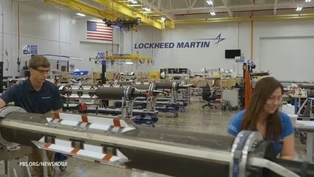
MIKE CERRE: We caught back up with Richard Bew at Lockheed Martin's missile production headquarters in Grand Prairie, Texas, where he reported back to the company on what he learned.
It can take more than a year and an estimated $3 million to $4 million to make a single Patriot missile, according to Lockheed officials.
To reduce the shortages, Lockheed Martin is expanding its facilities, work force, and creating joint ventures in other industries to maintain its supply chain of components, which make up more than half of a missiles assembly.
RICHARD BEW: This is what's going to allow us to go from 400 to 600 historic demand per year for a Patriot upwards of 2,000 by 2030.
MIKE CERRE: That's 2,000 Patriots total, however the U.S.
allocates them.
The Ukrainians and American forces in the Middle East have reportedly used up that 2030 production target amount in just the past year.
TIM CAHILL, Lockheed Martin Missiles and Fire Control: This has been a problem that's been brewing for a long time over many years, as we have recognized that warfare is changing and the number of interceptors you might need for a prolonged conflict is becoming larger and larger.
MIKE CERRE: Tim Cahill, president of Lockheed Martin's missile and fire control business, thinks a new, cheaper version of the Patriot, the PAC-3 ACE, is easier to build and can help close the supply and demand gap.
TIM CAHILL: PAC-3 ACE is designed to be in aggregate about two-thirds performance for about half the price, fits right into a Patriot unit, designed to go after targets not quite as threatening as the current PAC-3 version.
MIKE CERRE: Other alternatives include using even less sophisticated reconfigured weapon systems to address the Russians' new rocket-powered Shahed drones.
RICHARD BEW: It's not going to go after your ballistic or hypersonic missiles.
You're going to use your PAC-3 MSEs for that.
But this is going to get what is now becoming the predominant threat and strike weapon in places like Ukraine and others.
MIKE CERRE: Lockheed has also developed a new drone interceptor like this one that can take down multiple drones at a time, which could be deployed on a limited basis to Ukraine or the Epic Fury campaign in Iran by the end of the year.
SETH JONES, Center for Strategic and International Studies: What we're seeing with the war in Ukraine and what with the U.S.
expenditure of munitions in Operation Epic Fury, that the U.S.
services made a major mistake in not building up munition stockpiles, and it has put the U.S.
military in the hole that it now sits in right now.
MIKE CERRE: Seth Jones, with the Center for Strategic and International Studies and a former Department of Defense official, has written extensively about the U.S.'
steady loss of its weapons surge capacity since the end of the Cold War.
SETH JONES: You can't deter an adversary if you don't have sufficient stockpiles.
So I think it's highly unlikely that the U.S.
is going to be giving a lot of its current inventory of Patriots to the Ukrainians.
That's the -- and the U.S.
actually also needs them for its own homeland defense.
MIKE CERRE: While in Ukraine, Richard Bew and the other American volunteers saw how the Ukrainians are trying to close the armed supply gap by making their own, and were briefed by Ukraine military brigade commander, who did not want to be identified, on what they now need to hold off the Russians.
What was your biggest takeaway being on the ground in Ukraine, spending a few nights in a bomb shelter?
What did you take, bring back here from that experience?
RICHARD BEW: This conflict has changed character several times.
If you remember, in the initial invasion, everybody thought it was going to be a three-day war and Russia was going to roll over Ukraine.
Taking a look at what happened.
Ukraine used Javelin missiles, right, to stop the convoys of Russians at the beginning.
We need to be anticipatory to make sure that what demands come next we're already working on.
MIKE CERRE: With no end in sight for either the Ukraine war or armed conflicts throughout the Middle East, the Ukrainians are likely to be spending many more long and anxious nights under the Russian siege from above.
For the "PBS News Hour," Mike Cerre, Kyiv, Ukraine.
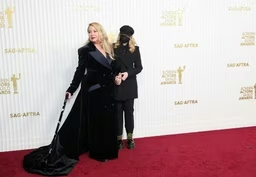
GEOFF BENNETT: When actor Christina Applegate revealed earlier this week that she had been misdiagnosed with multiple sclerosis, it triggered not only an outpouring of empathy for her, but raised important questions about how often people are told they have the condition when they actually don't.
Our William Brangham has more.
WILLIAM BRANGHAM: Applegate was first given that M.S.
diagnosis five years ago after complaining of what became debilitating symptoms, including stabbing pains, fatigue, and difficulty walking.
On her podcast about living with what she thought was M.S.
-- the podcast is called "MeSsy" and it's co-hosted by actor Jamie-Lynn Sigler -- Applegate described the very moment she got this news from her doctor.
CHRISTINA APPLEGATE, Actress: She came into my room and she said: "Congratulations.
You don't have M.S.
Congratulations."
JAMIE-LYNN SIGLER, Actress: What does that moment feel like?
So loaded.
I cannot imagine.
CHRISTINA APPLEGATE: Well, I was like not happy at all.
JAMIE-LYNN SIGLER: Yes.
CHRISTINA APPLEGATE: You know, not -- everybody else was so happy.
JAMIE-LYNN SIGLER: I know.
When you told me, I feel like... JAMIE-LYNN SIGLER: My literal first words for you like, you can dance again, because that's just like where my head goes here.
CHRISTINA APPLEGATE: Yes.
Right.
JAMIE-LYNN SIGLER: You know what I mean?
Like... CHRISTINA APPLEGATE: Because you don't get misdiagnosed, and then all of a sudden I'm better.
WILLIAM BRANGHAM: And Applegate is not alone.
Statistics vary on the rate of misdiagnosis, but they range anywhere from 5 percent to one analysis estimating it's as high as 40 percent.
For more on all of this, we are joined now by Dr.
Michael Kornberg.
He's an associate professor of neurology at Johns Hopkins University.
Dr.
Kornberg, thank you for being here.
We should say at the outset, you are not Christina Applegate's doctor.
You have not reviewed her medical files.
But we have to assume she has plenty of resources, has access to excellent care.
How is it that this could have occurred?
How common is this?
DR.
MICHAEL KORNBERG, Johns Hopkins Medicine: So you mentioned the range of figures from various studies.
I would say that, in a specialty clinic where you are seeing neurologists who are experienced in treating people with multiple sclerosis, it's going to be on the lower end of that estimate.
But that still leaves somewhere to 5 to 10 percent of people who were given a diagnosis of M.S.
that later are told that that is an incorrect diagnosis.
The majority of cases, it is pretty clear, but obviously there's a sizable minority for whom that's not the case.
WILLIAM BRANGHAM: And why is that?
Why is M.S.
so hard to pin down?
DR.
MICHAEL KORNBERG: So there's a few issues.
The first is, it affects the brain and the spinal cord, which are not very accessible organs.
We're not doing biopsies for diagnosis.
There's no one single test that tells you have M.S.
There's not something in your blood or spinal fluid that everyone with M.S.
has and everyone without M.S.
doesn't have.
And so it is a matter of having typical neurologic symptoms and typical findings on MRI of the brain and spinal cord, sometimes supplemented with other tests.
But other conditions that cause neurologic symptoms that can cause some abnormalities on a brain MRI can be confused for M.S.
and lead to a misdiagnosis.
WILLIAM BRANGHAM: I know you're not a psychologist, but I imagine it must be just very shocking for a patient to spend many years thinking they have one thing, only to find out that that's not what has been ailing them.
DR.
MICHAEL KORNBERG: That is absolutely right.
So, the issue of misdiagnosis in M.S.
is something that has been studied.
It is a topic that we talk about in the M.S.
community.
And it is very distressing for people.
I think Christina Applegate articulated all of this and all of those common feelings very well.
So, when you are living with chronic disabling symptoms, it is not -- it is not reassuring to be told that you don't have M.S.
What you're being told is, the cause of your symptoms are not M.S., but you're still living with them.
It means it's something else.
But then also you're taking away the comfort that comes with just having a label for what's happening to you, what's going on in your body.
That is very comforting to people, even if they are still living with symptoms.
And as she mentioned in her podcast, she became very close to the M.S.
community.
This became kind of part of her identity, which often happens, and it can be very distressing when that is taken away from you.
WILLIAM BRANGHAM: Here's another tiny bit of her podcast.
Here's -- this is how she described where she finds herself today.
CHRISTINA APPLEGATE: And so I'm back at square one that I don't know what's going on with me.
And that's going to be an online investigation that my doctors are going to get into and just to find out, what has been happening since 2021?
Why did this happen?
I have every symptom of someone with M.S., every single one.
WILLIAM BRANGHAM: So, if someone is living with this suite of symptoms, or someone is living with a diagnosis of M.S.
and is hearing this news and might be uncertain about what they really have or whether they have been misdiagnosed, what would you counsel them?
DR.
MICHAEL KORNBERG: Yes, so, many things that we could say.
But, first, I do think it's important to say that, even though there is a minority, a sizable minority of people for whom this is an issue, that in the majority of cases it is a clear diagnosis.
And so I don't want everyone living with M.S.
thinking that, oh, my gosh, I probably was misdiagnosed.
Having said that, a few other things that we could say.
First, if you are having any question, obviously, it is never a bad idea to have a second opinion.
I think it is a good idea if you have M.S.
to be treated by a neurologist who has significant experience treating people with M.S.
Some other things that we can say is that there are some symptoms of M.S.
that are very typical and others that are you know what we call nonspecific and shared with other conditions.
And Christina Applegate mentioned a few.
Fatigue, very common in M.S., very common in other conditions.
Pain, very common in M.S., common in others.
And so if you're having some of these more nonspecific symptoms, if you get the sense that there is something unusual or atypical about your presentation, your case, then it doesn't hurt to get a second opinion.
It certainly doesn't hurt to just be open and honest about your concerns with your neurologist.
A good neurologist should be able to tell you whether you have a straightforward case of M.S.
or in instances where there's uncertainty.
WILLIAM BRANGHAM: Dr.
Michael Kornberg of Johns Hopkins, thank you so much for being here.
DR.
MICHAEL KORNBERG: Thank you very much for having me.
GEOFF BENNETT: For decades, federal Pell Grants have helped millions of students from low- and middle-income families afford college.
Now, for the first time, that financial aid will also be available for short-term vocational training programs designed to help students enter the work force.
Stephanie Sy reports on the rollout of Workforce Pell, the largest expansion of the federal grant program in 50 years.
It's part of our higher education series called Rethinking College.
STEPHANIE SY: At Ivy Tech Community College campus in Anderson, Indiana, learning is hands-on.
WOMAN: Fourth intercostal space, we're going to put that right here.
STEPHANIE SY: From putting on an EKG to administering shots... WOMAN: Good job.
Good technique.
STEPHANIE SY: ... to drawing blood.
In just eight weeks, these students are trained to become certified clinical medical assistants, or CCMAs.
They're the folks at the doctor's office who might take your vital science or get your medical history at the start of your appointment.
And they're in high demand, says program chair Sara Standlee.
SARA STANDLEE, Ivy Tech Community College: A lot of my students, they'll get hired before they graduate.
That's how much of a need there is for medical assistants out there right now, because the fact of the matter is, is we have got a lot of people that need medical care, and we don't have enough people to be able to care for them.
STEPHANIE SY: Twenty-two-year-old Makaila Collins sees becoming a CCMA as a stepping-stone on the way to becoming a registered nurse.
MAKAILA COLLINS, Student, Ivy Tech Community College: I decided to take the route of getting my CCMA first.
And then a lot of the times, if you go work for like a big hospital network, they will actually pay for you to go back to nursing school.
STEPHANIE SY: Just getting here took perseverance and waiting a lot of tables.
MAKAILA COLLINS: I had to take a break for a few years and just work just to build up that savings to be able to pay for this class.
STEPHANIE SY: How much was that?
Do you remember?
MAKAILA COLLINS: One thousand four hundred and fifty-three dollars.
(LAUGHTER) MAKAILA COLLINS: I remember exactly because I had to take it all out and then send in the payment.
STEPHANIE SY: But, soon, students in this course will have access to new financial support.
This summer, Ivy Tech's certified clinical medical assistant program became the second in the country to be approved for a new federal grant called Workforce Pell.
(CHEERING) STEPHANIE SY: President Trump signed it into law in the so-called One Big Beautiful Bill.
NICHOLAS KENT, U.S.
Undersecretary of Education: We're actually building the new program to align with industry needs and provide a much-needed alternative to the traditional four-year experience.
STEPHANIE SY: It expands the Pell Grant program, which first rolled out in 1973 to give students from low-income households a path to higher education and ideally a path into the middle class.
Pell Grants help fund college-style courses at least a semester or 15 weeks' long.
Now, under Workforce Pell, short courses between eight to 15 weeks in length qualify.
MOLLY DODGE, Senior Vice President of Work Force and Careers, Ivy Tech Community College: Fifty-eight percent of our students access federal Pell.
STEPHANIE SY: Molly Dodge, Ivy Tech's senior vice president of work force and careers, has advocated for the change for more than a decade.
MOLLY DODGE: In Indiana, we're a bit competitive, so we wanted to be first, but we were thrilled to have such a quick turnaround on the approval and the opportunity to now launch a Workforce Pell program.
STEPHANIE SY: To be eligible for funding, programs must train students for occupations defined by each state as high skill, high wage or in demand and meet federal requirements.
MOLLY DODGE: Workforce Pell has what we call the 70/70 rule, meaning 70 percent of our learners need to complete the program, which has not been an issue at Ivy Tech, but also 70 percent of the cohort enrolled in a Workforce Pell pathway have to be employed associated with that training six months after they graduate.
STEPHANIE SY: The federal government started accepting applications in July.
And so far, 21 programs across six states have been approved to train future emergency medical technicians, firefighters, electrical line workers, and more.
Once Workforce Pell rolls out nationwide, an estimated 190,000 students per year will receive an average grant of $2,200.
Ivy Tech expects the funding to especially benefit its adult learners, many of whom, like CCMA students Kaitlynn Creason and Terra Randolph, are juggling parenting, work, and school.
TERRA RANDOLPH, Student, Ivy Tech Community College: I really want to be a nurse, but having my two children and then being young, I just knew that getting my foot in the door would help me eventually make that goal.
STEPHANIE SY: They say being able to enter a medical occupation after only two months is a major bonus.
KAITLYNN CREASON, Student, Ivy Tech Community College: If I were doing a two-year program, it's like, dang, my kid's going to be 5 by the time I finally get one step closer.
So I think that would be just a little bit discouraging.
STEPHANIE SY: What about you, Terra?
Do you think that, without this, you would not have a path towards postsecondary education?
TERRA RANDOLPH: To an extent, yes, because nowadays, with the economy, like, it's hard.
It's hard to raise a family off of one person's income.
And with it being a shortened course, it allows me to get out there quicker.
STEPHANIE SY: Some states identified this need years ago.
Here in Indiana, the Workforce Ready Grants have existed since 2017, helping students fund those shorter-term vocational courses.
This year, demand for that state funding exceeded supply; 41-year-old father Jenkins Reese counts himself lucky.
It covered his tuition for a three-week commercial driver's license.
JENKINS REESE, Graduate, Vincennes University: I was ecstatic that I was able to get the grant to do it, so -- because this is going to help my family tremendously.
STEPHANIE SY: He owns a construction company, but with work scarce in the winter, truck driving will help support his family of eight.
JENKINS REESE: Jobs are already coming in recruiting us to work for them.
So I really don't even have to go look for the work.
That's a great benefit of it.
STEPHANIE SY: According to Indiana, grant recipients who complete their training programs increase their salaries by about $6,800 a year.
But skeptics say short-term courses may not all live up to their promise.
WESLEY WHISTLE, New America: I think some of these programs will have really great outcomes.
I worry that more of them will not.
STEPHANIE SY: Wesley Whistle works on student success and affordability at New America, a progressive think tank where he's advised over 30 states on their rollout of Workforce Pell.
WESLEY WHISTLE: We have to do right by our Pell students, because, if we don't put in the right guardrails, then we really risk sending them into programs with taxpayer money that actually won't actually pay off for them.
STEPHANIE SY: He points to research suggesting that the earnings boost from short-term certificates is short-lived, and says they are no substitute for a college degree.
WESLEY WHISTLE: One of my biggest concerns with Workforce Pell over the last decade that I worked on this has been the risk of a potential -- quote, unquote -- "diversion effect," where when you're talking to a low-income student, when you tell them that they can go for eight weeks and get a middle-class job, that's really promising.
And the problem is, if that reality doesn't line up in many cases, right, all the evidence says the more education you get, on average, the more training you have, the higher earning potential you have.
MOLLY DODGE: I think there's a both/and for accelerated programs, for associate degree programs, for four-year programs.
STEPHANIE SY: But back at Ivy Tech, Molly Dodge says a student can build on Workforce Pell programs.
MOLLY DODGE: We need to offer as many pathways as possible for students to access the education that they need to qualify for a role.
Then we, the employers, postsecondary, need to work together to ensure those students then have access to upskilling pathways to continue their education.
STEPHANIE SY: Student Makaila Collins is already applying for certified clinical medical assistant roles, but her income might face at least a temporary hit.
MAKAILA COLLINS: Even if it is a pay cut, it's worth it because I always tell people, I love waitressing, but I'm not passionate about it like I'm passionate about health care.
STEPHANIE SY: And she says worth it to get herself one step closer to becoming a full-fledged nurse.
MAKAILA COLLINS: I can't wait for the day that I'm out of school and I can sit back and be like, wow, I really did that.
Wow, I'm really proud of myself for doing that.
STEPHANIE SY: For the "PBS News Hour," I'm Stephanie Sy in Anderson, Indiana.
GEOFF BENNETT: An acclaimed novel comes to life as a new opera exploring a deeply personal side of one of America's most consequential presidents, Abraham Lincoln, and the profound grief that shaped his life.
Senior arts correspondent Jeffrey Brown takes us to the Metropolitan Opera in New York for our arts and culture series, Canvas.
JEFFREY BROWN: A young boy seemingly alone in a cemetery at night, a real burial ground, but also a fantastical world of ghosts.
We're in the bardo, a Tibetan word for a space between our world and whatever comes next.
What, composer Missy Mazzoli asked herself, does that sound like?
MISSY MAZZOLI, Composer: It's sunset in the cemetery and the ghosts are sort of waking up.
So you hear this kind of cacophony.
And, musically, there are kazoos that some of the chorus members are playing.
They're talking, they're chatting, and, of course, they're singing.
JEFFREY BROWN: Wait a minute.
Kazoos are not typically heard on the stage here, right?
(LAUGHTER) MISSY MAZZOLI: Not typically.
I really wanted to start this opera with a sound that signaled to the audience that this was not going to be a typical opera and that we were not quite in reality.
JEFFREY BROWN: Now Mazzoli and her longtime collaborator, librettist Royce Vavrek, are debuting their new opera, "Lincoln in the Bardo," on the grandest of all stages, New York's Metropolitan Opera.
ROYCE VAVREK, Librettist: It's what we dream of as young opera creators.
JEFFREY BROWN: So this is big for you too.
ROYCE VAVREK: This is huge.
MISSY MAZZOLI: This is the biggest, the biggest thing we have ever done, yes.
JEFFREY BROWN: We joined rehearsals, conductor Yannick Nezet-Seguin working through the score with the Met Orchestra.
MISSY MAZZOLI: Since we're not hearing the pitch, maybe you just stay on the C sharp.
MAN: The whole time?
MISSY MAZZOLI: Yes.
MAN: That's very helpful because the G and the G sharp are... JEFFREY BROWN: With Mazzoli close at hand offering guidance.
Meanwhile, Royce Vavrek was in the main hall, as the cast and creative team figured out all the moving parts on stage, including pyrotechnics.
The opera is adapted from the acclaimed 2017 novel by George Saunders, winner of the Booker Prize, which he based on real events in 1862, when, in the midst of the Civil War and its growing carnage, a grieving Abraham Lincoln visited at a crypt in Washington, D.C.
's Oak Hill Cemetery that held the body of his 11-year-old son, Willie, who died of typhoid fever.
Nine years ago, Saunders spoke of his book on the "News Hour."
GEORGE SAUNDERS, Author, "Lincoln in the Bardo": When I first heard the story about Lincoln, I -- it was so beautiful to me and sorrowful and gorgeous that my mantra was kind of just make the ending so -- make the book so weird and beautiful that it would do some justice to that emotional core.
JEFFREY BROWN: Weird in the sense that, in both novel and opera, these are ghosts who feel and act very human.
They don't even know they're dead, emotional in the sense that the loss and intense grief are very real.
President Lincoln is the only living character we meet, and his pain is boundless.
Here he sits side by side with his dead son, the two once so close now unable to connect directly.
ROYCE VAVREK: It is the story of Lincoln's grief.
He's drenched in mourning.
His 11-year-old son has passed.
And yet George has found this really beautiful, effervescent, often extremely funny world of ghosts with which he tells the story.
JEFFREY BROWN: The Met added to the fun with a preview of the opera, working with the wonderfully named arts group Death of Classical, musicians and performers amid elaborate crypts and tombs within Brooklyn's Green-Wood Cemetery, which dates back to 1838.
For her part, composer Missy Mazzoli is also a certified end-of-life doula, someone who works with individuals and families through the dying process, offering emotional and other kinds of support.
MISSY MAZZOLI: It really affected how I wrote for these characters.
What struck me was just that the things people hold on to and cling to in the moments before they pass or in the weeks and months before they pass are always so unexpected.
JEFFREY BROWN: That's captured in this passage in which characters, ghosts, sing of the little things in life they cling to.
MISSY MAZZOLI: It's not career.
It's not fame.
It's none of that.
It's a piece of rug tuft, it's beer froth, it's a gaggle of children in a snowstorm, it's just these little images that tether us to life and that we end up cherishing at the end.
And that really resonated with my experience of working with dying people.
JEFFREY BROWN: Director Lileana Blain-Cruz, a veteran theater director working on her second opera here, had the task of creating an on-stage world somewhere between life and the afterworld.
Fortunately, she says: LILEANA BLAIN-CRUZ, Director: I love liminal spaces.
I love the in-between.
JEFFREY BROWN: The middle, between and -- yes.
LILEANA BLAIN-CRUZ: Betwixt, between.
Where are we?
What is -- what is this?
What are we experiencing?
What is life like?
How do we wrestle inside of that?
And so part of the thing that I work with, with designers is thinking about like, OK, what has the essence of what is real and tangible, and then how do we offset that?
Like, what do we do to kind of elevate or create the surreal quality of it?
JEFFREY BROWN: One thing she had going for her, at the Metropolitan Opera, everything is big.
Puppet designer James Ortiz did his thing to add to the surreal.
You have got puppets.
LILEANA BLAIN-CRUZ: That's right.
That's right.
JEFFREY BROWN: You have got a horse.
LILEANA BLAIN-CRUZ: We went through this idea of like, OK, great, we have James on the team.
Is the horse a puppet?
And we went down that pathway, and it's like, no, the horse can't be a puppet.
Lincoln is real.
His horse has to be real.
So it's like, hello, Met, we need a horse.
JEFFREY BROWN: She got her horse, but everyone involved knows the stakes are enormously high for the Metropolitan Opera, which has serious financial woes and needs hits, and for opera itself, which still wrestles with the risks of staging new works like this one.
ZOHRAN MAMDANI (D), Mayor of New York City: Welcome to a night at the opera.
JEFFREY BROWN: As it happens, New York City Mayor Zohran Mamdani recently announced a plan to give away 70,000 seats at The Met this season by lottery to anyone who hasn't attended an opera since at least 2018.
And composer Missy Mazzoli, who spent a career seeking to make opera feel more open and welcome to all, heard about it in an unexpected place.
MISSY MAZZOLI: I was just on the subway this morning and people were talking about it.
So this is something that goes beyond... JEFFREY BROWN: You were on the subway this morning.
MISSY MAZZOLI: Yes.
JEFFREY BROWN: As was I. MISSY MAZZOLI: The A Train.
JEFFREY BROWN: And on your train, they were talking about opera?
MISSY MAZZOLI: Opera and this initiative by the mayor to offer free tickets.
And the guy across from me said: "Oh, I went to one opera in 2019, but now I really want to go back.
Do you think I'm eligible?"
And I'm like: "Talk to the mayor.
I don't know."
(LAUGHTER) MISSY MAZZOLI: But it was just -- I was like, oh, my God, I'm on the subway, and we're all talking about opera.
This is extraordinary.
JEFFREY BROWN: Now on stage, "Lincoln in the Bardo" has performances through November 14.
For the "PBS News Hour," I'm Jeffrey Brown at the Metropolitan Opera in New York.
GEOFF BENNETT: And that's the "News Hour" for tonight.
I'm Geoff Bennett.
For all of us here at the "PBS News Hour," thanks for spending part of your evening with us.
 New
Christina Applegate's experience highlights challenges of MS
Video has Closed Captions
Christina Applegate's experience highlights challenges of diagnosing MS (7m 6s)
 New
DOJ and DHS election plans raise concerns of interference
Video has Closed Captions
DOJ monitoring plans and DHS voter checks raise concerns of election interference (6m 1s)
 New
Inside the race to build Patriot missiles as stocks run low
Video has Closed Captions
Inside the race to build Patriot missiles as stocks run low (6m 16s)
 New
Met Opera adapts experimental novel 'Lincoln in the Bardo'
Video has Closed Captions
Met Opera adapts experimental novel 'Lincoln in the Bardo' for the stage (7m 58s)
 New
News Wrap: Lawmaker charged with leading criminal enterprise
Video has Closed Captions
News Wrap: Virginia state senator charged with running criminal marijuana enterprise (7m 31s)
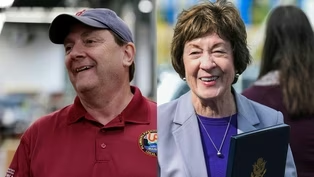 New
What Maine voters are saying about the tight Senate race
Video has Closed Captions
What Maine voters are saying about the Collins-Jackson Senate race (8m 38s)
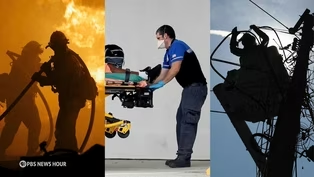 New
Workforce Pell Grants open access to job training
Video has Closed Captions
Workforce Pell Grants give students new options for job training (8m 43s)
Providing Support for PBS.org
Learn Moreabout PBS online sponsorship
- News and Public Affairs

Today's top journalists discuss Washington's current political events and public affairs.
 New Episode
- News and Public Affairs

FRONTLINE is investigative journalism that questions, explains and changes our world.
 New Episode


 New Episode



 New Episode



 New Episode
Support for PBS provided by:
Major corporate funding for the PBS News Hour is provided by BDO, BNSF, Consumer Cellular, American Cruise Lines, and Raymond James. Funding for the PBS NewsHour Weekend is provided by...